
Vision 2030 executive hiring has fundamentally changed, and most international candidates are still preparing for the wrong interview
Reading time: 9 minutes
Last updated: November 2026
Key takeaways
Vision 2030 executive hiring now turns on one question: what will you leave behind? Saudi hiring committees judge international directors on their knowledge transfer plan as much as their experience, and Saudisation for project management roles rises to 70% in February 2027. Demand is strongest where contracts or regulation hold it in place.
I once worked with a highly experienced Operations Director: 20 years in the sector, two successful international postings, an impressive CV by any measure.
He reached final interview for a significant role in Riyadh. He didn’t get it.
The candidate who did had a shorter CV and less experience. What he had was a 90-second answer to a question my client hadn’t prepared for:
“What will you specifically do to develop Saudi talent during your time here?”
My client gave a polished, corporate non-answer. The other candidate gave a real one. That moment cost him the role. And it captures everything that has fundamentally changed about Vision 2030 executive hiring, and what most international professionals still don’t understand.
Why has Vision 2030 executive hiring changed?
Vision 2030 executive hiring has changed because Saudi Arabia now expects international hires to build local capability as well as deliver a remit. The old model of international hiring in the Gulf was transactional: bring your skills, deliver your remit, move on. Saudi Arabia accepted that in an earlier era, and it no longer does.
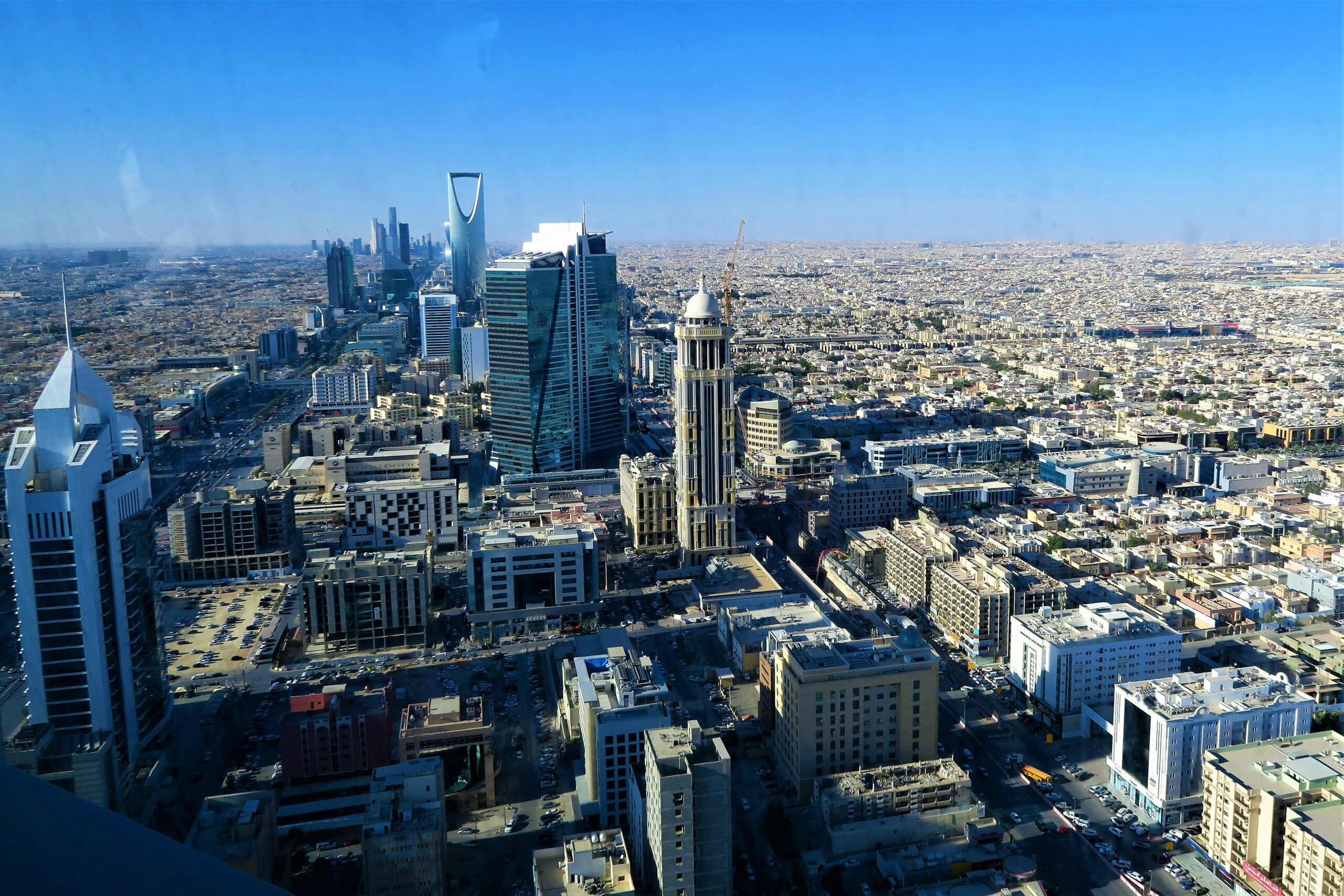
Vision 2030 is a generational transformation project. The Kingdom is building industries in tourism, entertainment, renewable energy, technology and healthcare that either didn’t exist or were underdeveloped a decade ago. The Public Investment Fund (PIF) drives hundreds of initiatives across multiple sectors, although its 2026 to 2030 strategy now funds them more selectively. Unemployment among Saudi nationals stood at 6.5% in the second quarter of 2026, according to the General Authority for Statistics (GASTAT). That is below the original Vision 2030 target of 7%, which the government has since replaced with a 5% goal.
International hires are now expected to transfer knowledge, mentor Saudi nationals and contribute to the pipeline of local leadership talent. Saudisation quotas keep tightening: project management roles move to 70% Saudisation from 14 February 2027, procurement roles are already at 70%, consulting professions at 40% and engineering roles at 30%. Every senior hiring decision carries an implicit question behind it: what does this person leave behind when their contract ends?
The executives winning in this market understand that. They position themselves as builders of capability, teams and institutions, while the ones who don’t are still leading with their CV. If you are an expat executive working through these pressures, understanding the three positions every expat executive sits in relative to Saudisation is essential reading.
What has actually changed in the Saudi market?
Five years ago, the dominant hiring in Saudi Arabia was concentrated in oil and gas, government ministries and traditional banking. Today the highest-demand sectors include healthcare transformation, technology and digital infrastructure, renewable energy, financial services and education reform. For a detailed breakdown of sector-level opportunities, see our guide to career opportunities and emerging sectors in Saudi Arabia.
The scale of investment has been unlike anything the region has seen, and priorities are now being reset. NEOM halted work on The Line until at least after 2030, according to Semafor’s May 2026 reporting, and PIF’s strategy now describes NEOM’s priorities as ports, manufacturing, green hydrogen and AI. Other PIF projects have been reprioritised too: Reuters reported in January 2026 that construction of The Mukaab in Riyadh had been suspended. Even the World Cup programme is under review: Reuters reported in October 2026 that NEOM Stadium had been shelved. Each project operates as a distinct organisation with its own leadership structure, hiring strategy and culture.
A candidate who understands NEOM’s structure is not automatically equipped for Red Sea Global or Diriyah. They are different briefs, and interviewers know quickly whether you understand that distinction.
The Saudi government has also moved to open the market to international talent more deliberately. The Premium Residency Visa, effectively a Saudi green card, has been introduced for qualifying professionals, and business registration for foreign nationals has been streamlined. Saudi female labour force participation stood at 33.7% in the second quarter of 2026, according to GASTAT, reshaping team dynamics across sectors.
The Vision 2030 executive hiring process itself is more rigorous than many candidates expect. Cultural due diligence on candidates is taken seriously. Decision-making respects hierarchy and moves at its own pace. Prior Gulf experience is viewed as useful context, and it does not replace Saudi-specific preparation. Candidates who assume otherwise are typically found out early in the process.
The regional conflict has added a further filter this quarter. The UK Foreign, Commonwealth and Development Office advises against all but essential travel to almost all of Saudi Arabia, the US rates the Kingdom at Level 3, Reconsider Travel, and employers are deferring start dates for international hires. Roles are being held open, so the preparation described below still decides who gets them.
Which five mistakes cost international candidates senior roles?
Understanding how Vision 2030 executive hiring works means understanding where candidates go wrong. These are the five most common mistakes I see across my client base.
1. Applying with a CV written for a Western audience
Saudi hiring committees read your CV differently. They want to see quantified impact, clear leadership scope and evidence of managing diverse, multicultural teams. A CV optimised for a FTSE 100 board will frequently land flat in Riyadh. If your CV was built for a Western search process, treat it as the starting point for a Saudi version. See our guidance on CV positioning for senior roles.
2. Treating prior Gulf experience as Saudi preparation
The UAE and Saudi Arabia operate on fundamentally different cultural and business rhythms. Relationship dynamics, decision-making culture, the pace of negotiation and the social context are all distinct. Candidates who treat them as interchangeable are usually found out quickly.
3. Under-researching the specific projects
If you are targeting roles in tourism, construction, entertainment or urban development, you need to understand each giga-project as a distinct organisation: its leadership, its timeline, its current delivery priorities. Interviewers test this directly, and they expect you to reference a project’s published milestones and leadership appointments. With venue lists and project scopes changing through 2026, check what is still in delivery before you cite it.
4. No Saudi or GCC presence on LinkedIn
Executive search firms operating in the Kingdom are active on the platform. If your profile and content carry no signal of regional expertise or interest, you are effectively invisible to a significant part of this market. Understanding how the hidden job market operates in Saudi Arabia is essential, because most senior roles are never publicly advertised.
5. No prepared answer to the Nitaqat question
In every senior interview you will be asked, directly or indirectly, what you will do to develop Saudi talent. A strong answer is specific, grounded in your actual experience, and shows that you have thought seriously about commitment beyond contract delivery. In twenty years in senior talent acquisition, I have found this question to be one of the most decisive factors at final stage. Interview preparation lets you rehearse your answer under panel conditions before it counts.
What should a senior executive do before targeting Saudi Arabia?
Start by defining your Vision 2030 value proposition, because that is what a Saudi panel tests first. The first conversation I have with any executive targeting this market is the same: what is your Vision 2030 value proposition? I mean your specific value for a specific part of the Saudi transformation. Which organisation? Which capability gap? What will you leave behind when you fill it? Most candidates have not thought past the job description. The ones who reach final interview have.
As an Executive Career Coach and Fellow of the CIPD with twenty years in senior talent acquisition roles across multiple organisations and sectors, up to global head of TA level, I see the same pattern repeatedly in Vision 2030 executive hiring: the candidates who succeed at final stage arrive with a prepared knowledge transfer narrative as well as a strong CV.
Your CV and LinkedIn profile almost certainly need rebuilding for this audience. Saudi hiring committees read differently to Western ones, and mistake 1 above sets out what they look for first.
Research your target projects as organisations. Read their leadership announcements and published delivery milestones. The executives who reach final interview speak about these organisations as someone who has been paying attention for six months. In 2026 that also means knowing which projects are still in delivery and which have paused.
And prepare for the cultural dimensions of the process as a serious investment. The executives who thrive in the Kingdom are curious and patient. They understand that relationship-building here is the process itself. For international executives considering this move, our guide to what genuine preparation looks like before entering the Saudi market covers the full positioning strategy.
How long will the window for international directors stay open?
The window for international directors is narrowing as Saudisation rates rise profession by profession. Vision 2030 executive hiring remains significant, but the centre of gravity has shifted. Demand is most durable where a contract, a regulation or a fixed international commitment holds it in place: Saudisation-driven roles, renewable energy under signed power purchase agreements, health cluster reform and Aramco’s export infrastructure. FIFA 2034 and Expo 2030 still need senior leadership, although World Cup venue lists are under review. The PIF-controlled giga-projects are in a period of strategic reassessment, with budgets tightening and some programmes pausing. International hiring budgets remain real, and they are more selectively deployed than they were 18 months ago.
The Ministry of Human Resources and Social Development sets those rates, with project management moving to 70% in February 2027. As Saudi nationals develop the experience to fill more of these roles, and they are developing it rapidly, the case for international senior hires will need to be made more compellingly.
The executives who position themselves well now, build their GCC credibility and do the preparation work seriously will be the ones in Riyadh boardrooms through the end of this decade. Saudi nationals being fast-tracked into leadership positions should also read our guide on the leadership transition challenge facing newly promoted Saudi executives.
For further reading, see our guides to Vision 2030’s impact on career management in Saudi Arabia and the Saudisation policies shaping the talent market.
When a Saudi hiring committee looks at your profile, your CV and the way you show up in conversation, do they see someone who has come to extract value from Vision 2030, or someone who has come to contribute to it? That distinction is worth more than another line on your CV.
Ready for the Nitaqat question?
A free 15-minute strategy call: where you stand in your target market, how your knowledge transfer answer lands, and the right next step. If coaching is not the right fit, I will tell you.
Frequently asked questions: Vision 2030 executive hiring
What is the “Nitaqat question” and why does it matter in Saudi interviews?
The Nitaqat question is any version of “What will you do to develop Saudi national talent during your time here?” It comes up in virtually every senior interview in the Kingdom because Saudisation rules require companies to employ minimum percentages of Saudi nationals, through both the Nitaqat banding system and profession-specific quotas such as 40% in consulting, 30% in engineering and 70% in project management from February 2027. Hiring managers need confidence that international hires will build local capability. A vague or corporate answer is one of the most common reasons strong candidates fail at final stage.
How is Vision 2030 executive hiring different from hiring in the UAE?
The UAE and Saudi Arabia operate on fundamentally different rhythms. In the UAE, business culture is relatively internationalised and transactional. In Saudi Arabia, relationships are central to how business operates: trust is established first, then transactions follow. Decision-making is more hierarchical, processes move more deliberately, and cultural due diligence on candidates is more rigorous. Prior UAE experience is valued context, and it does not replace Saudi preparation.
What is a Vision 2030 value proposition and how do I build one?
A Vision 2030 value proposition answers three questions: which part of the Saudi transformation are you targeting, what specific capability gap can you fill, and what will you leave behind when your contract ends? It goes beyond describing your experience to setting out your contribution to Saudi Arabia’s long-term goals. Building one requires understanding your target organisation in depth (its leadership, delivery priorities and current talent gaps), then mapping your specific experience against those needs.
Is it too late to position yourself for Vision 2030 executive hiring opportunities?
No, but the preparation work matters more than it did two years ago. The most durable executive demand now sits in roles anchored by contracts, regulation or fixed international commitments, while PIF-controlled giga-projects are restructuring and the regional conflict has slowed hiring this quarter. Executives who understand where demand is genuinely active, build GCC credibility now and position themselves early are still well placed. Blanket applications to giga-projects without knowing which programmes are hiring are wasted effort.
Where is the strongest executive hiring demand in Saudi Arabia right now?
Executive demand is best understood in three tiers. Roles anchored by contracts or regulation, such as Saudisation-driven positions, renewable energy under signed power purchase agreements and health cluster reform, carry the lowest risk. Programmes with a fixed commitment but flexible scope, such as FIFA 2034 and Expo 2030, still need senior leaders, although World Cup venue lists are under review. Discretionary PIF projects carry the highest risk: NEOM has paused The Line until after 2030, and Reuters reported in October 2026 that NEOM Stadium had been shelved. Knowing which tier your target role sits in comes before any application.
Does my CV really need to be different for Vision 2030 executive hiring?
Yes, significantly. Saudi hiring committees assess CVs differently to Western ones: they look for quantified impact, clear leadership scope, evidence of managing multicultural teams, and signals that you understand the Saudi market. A CV written for a FTSE 100 board will typically land flat in Riyadh. Before sending any application, have your CV reviewed against Saudi hiring expectations, including how it presents knowledge transfer experience and any prior GCC or MENA exposure.
Richard Bunkham FCIPD | Executive Career Coach | Total Career Solutions Ltd
Specialist markets: UK · USA · UAE · Saudi Arabia | totalcareersolutions.com